Most generator owners blame rising diesel prices, but in many cases the real leak is inside the generator room. A set that runs at the wrong load, with a tired filter and a half-dirty tank, can quietly burn 15–25% more fuel than it should. The good news: you can fix most of it without buying anything new.
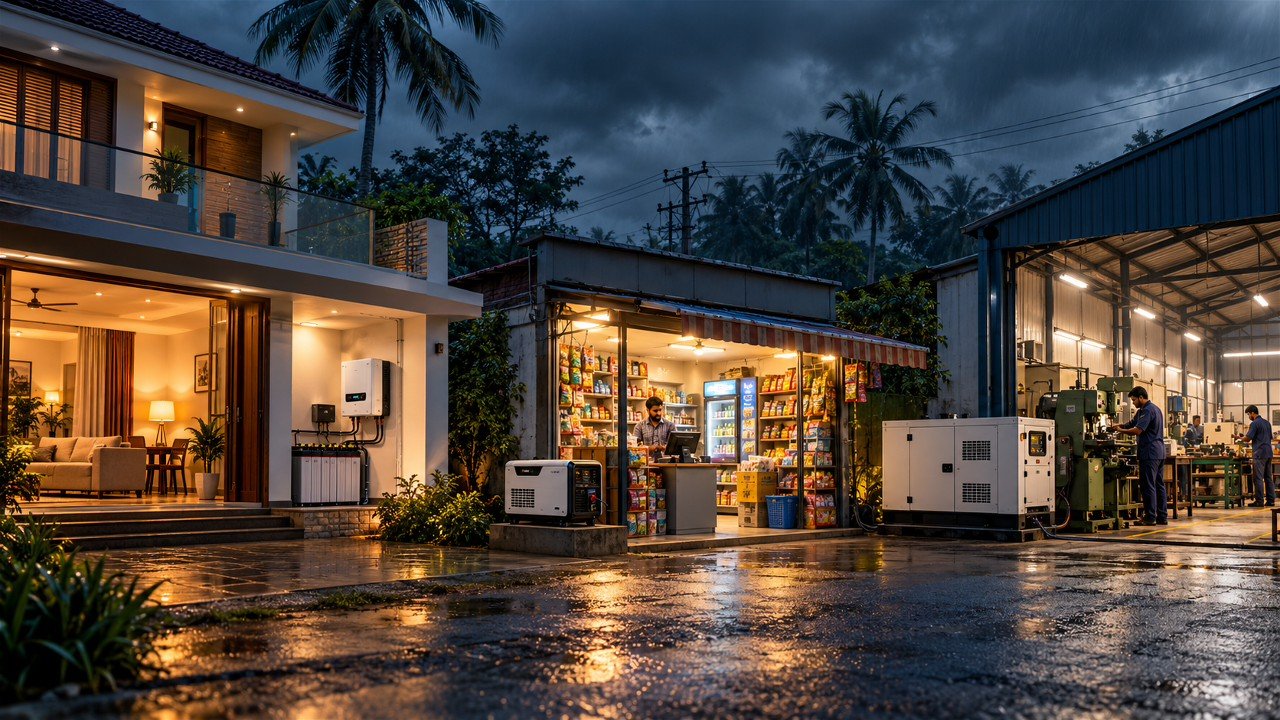
Whether you run a hospital backup, a resort, an apartment complex or a small workshop, this guide walks through practical ways to cut diesel use, including a few angles for most blogs to skip. If you are still choosing a set, speaking to experienced generator dealers in Kerala before you buy saves more fuel than any later tweak.
Start with the Right Size, Not the Biggest Size
An oversized generator is the most common reason for wasting diesel. Engines are most efficient at roughly 60–80% of rated load. Below about 30%, combustion turns incomplete, unburnt fuel collects in the exhaust, and you get “wet stacking”: black smoke, carbon build-up and more fuel per unit of power.
A quick check: look at the load meter during normal operation. If it rarely crosses 40%, the set is too big for the job. Here is what that means in practice:
- Add the real running load, not the connected load. Many sites never switch everything on together.
- Ask your supplier about two smaller sets in parallel. One runs at night; both run at peak.
- For seasonal sites such as resorts and halls, a smaller primary set plus a rental for festival peaks often costs less.
Experienced generator dealers in Kerala can run a load study before you commit. It is a short exercise that can affect your fuel bill for the next ten years.
Maintenance That Pays for Itself
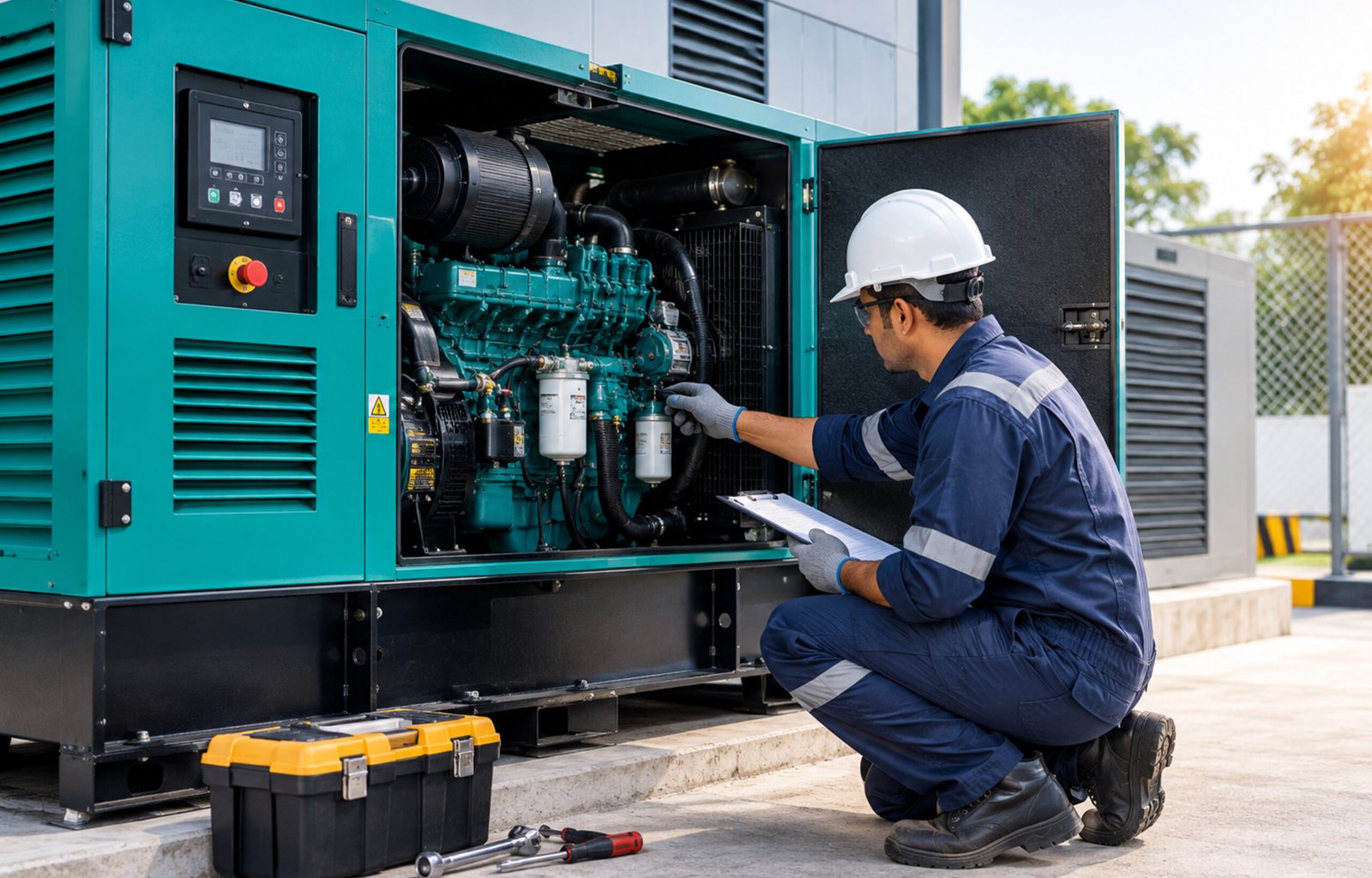
A clogged air filter starves the engine of air, so it injects more fuel to compensate. Worn injectors spray fuel in a poor pattern and waste it. Neither problem is visible until the bill arrives, so build a simple routine:
- Check the air filter monthly. In dusty or coastal areas, replace it earlier than the manual says.
- Change fuel filters and engine oil on schedule. Old oil raises friction and fuel use.
- Have injectors tested once a year or every 1,000–1,500 running hours.
- Check coolant level and the radiator. An overheating engine burns more fuel.
The Kerala Angle: Humidity and Dirty Diesel
Our monsoon climate causes a problem that few guides mention. Humid air lets moisture condense inside the fuel tank, and water in diesel allows microbial growth, often called the “diesel bug”. The result is a sludge that blocks filters and makes the engine run rough and burn more fuel.
Three habits help. Keep the tank full when the set is idle, since less empty space means less condensation. Drain the water separator weekly during the rain. Buy diesel only from busy, trusted pumps, and consider fuel polishing tanks that sit unused for months.
Manage the Load, Not Just the Engine
How you use the power matters as much as the machine itself.
- Stagger heavy starts. Air conditioners, pumps and lifts draw a surge when they start. Switching them on one at a time avoids load spikes that burn extra fuel.
- Fix power factor. A poor power factor means the generator works harder for the same useful output. Capacitor banks can help in sites with many motors.
- Use a priority panel. Connect only essential circuits during outages. Geysers, decorative lights and spare chargers can wait.
- Check cable losses. Long, thin cables waste energy as heat, and the generator burns diesel to cover it.
Keep the Room Cool and the Exhaust Free
Hot intake air is thinner, so the engine burns fuel less efficiently. Make sure the generator room has proper cross-ventilation and that nothing blocks the radiator airflow. A blocked or badly bent exhaust pipe raises back pressure, which also costs fuel.
Measure It, Then Improve It
Here is the habit that makes the biggest difference: keep a fuel log. Note the date, running hours, diesel added and the average load. Divide liters by kWh produced, and you have a benchmark. A healthy set at good load often lands around 0.25–0.30 liters per kWh. If your number creeps up, something needs attention long before a breakdown.
Also run the set on a proper load, or use a load bank test, at least once a month. Short no-load runs do little except build carbon.
Consider Automation and Hybrid Options
An auto mains failure panel starts the set only when needed and shuts it down when power returns, so it never idles for hours unattended. For sites with long, light-load periods, such as overnight security and lighting, a battery inverter or solar hybrid can carry the small load and let the generator rest. Many owners find these cuts running hours sharply.
Reducing diesel consumption is rarely about one big fix. It is the sum of small habits: the right size, clean filters, healthy fuel, sensible loads, and a simple log that shows you the truth. Start with the fuel log this week, and you will quickly see where the diesel is going.
If you are planning a new set or want an expert opinion on your current one, the team at Blue Diamond Agencies, one of the trusted generator dealers in Kerala, can guide you on sizing, installation and servicing.
FAQ
How much diesel does a generator use per hour?
It depends on the size and load. As a rough guide, a 100 kVA generator at 75% load uses about 17–20 liters per hour, and a 250 kVA set uses about 40–50 liters. Always check the manufacturer’s fuel consumption chart for your exact model.
How do I choose the right generator size?
Calculate your real running load, add a margin of about 20–25% for starting surges, and compare that with the generator’s rated output. Reliable generator dealers in Kerala, such as Blue Diamond Agencies, can run a load study to confirm the right capacity.
Does regular servicing really save diesel?
Yes. Clogged air filters, worn injectors and old oil make the engine work harder and burn more fuel. A routine service plan keeps consumption close to the manufacturer’s rated figures.
Where can I find trusted generator dealers in Kerala?
Look for dealers that offer load assessment, installation, genuine spare parts and after-sales service. Blue Diamond Agencies in Kochi supplies generators across Kerala and can advise on sizing, installation and maintenance.