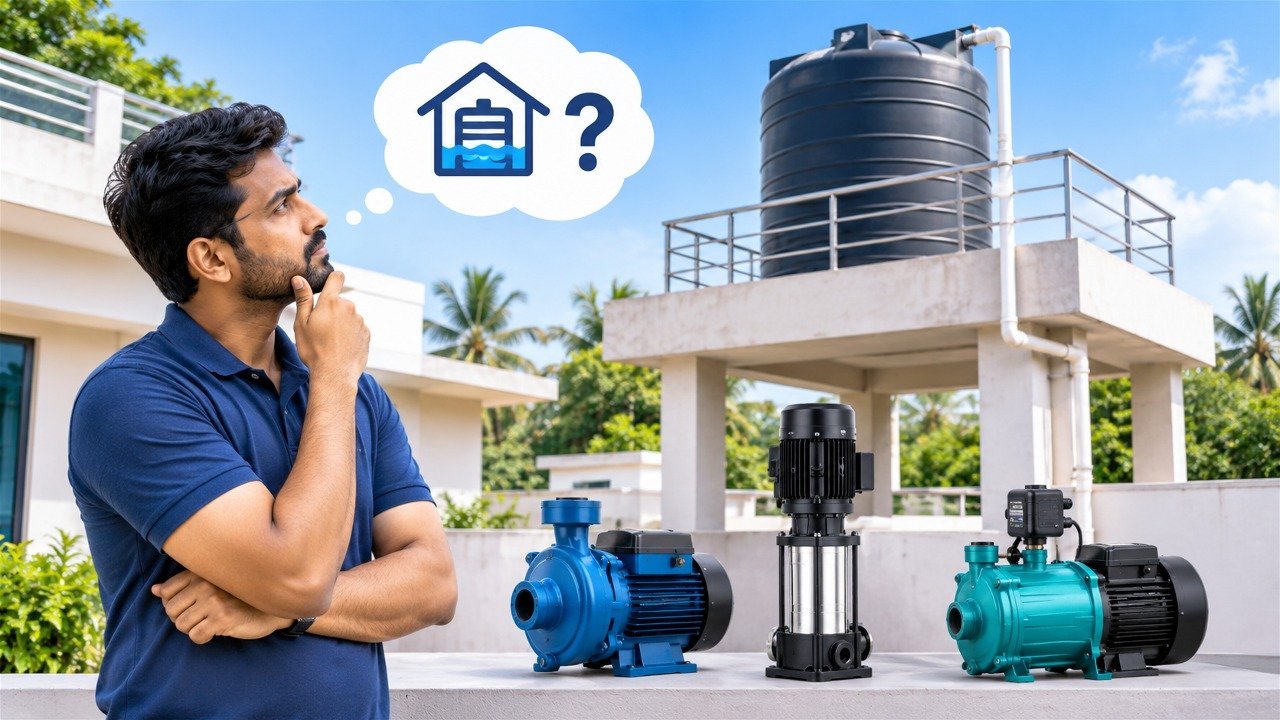
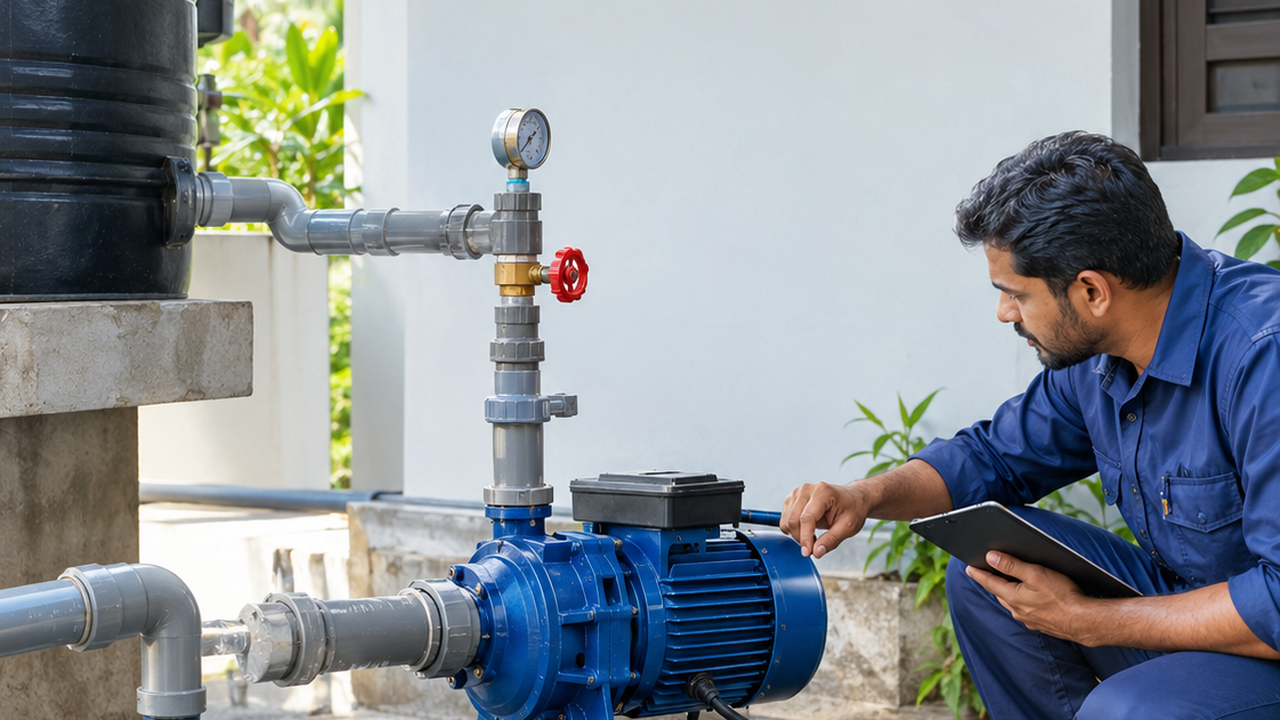
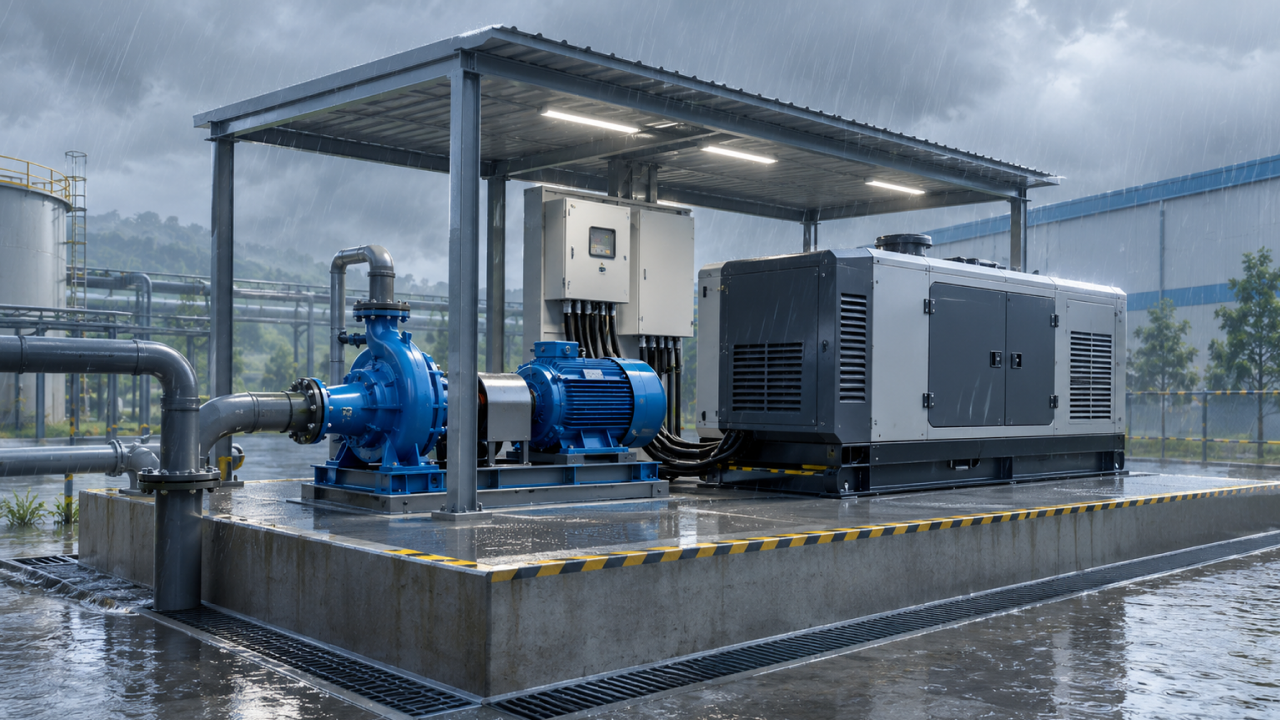
Anyone who has waited an hour for the terrace tank to fill or listen to a pump humming while no water arrives, knows how frustrating a wrong choice can be. No single pump suits every house. The best pump for overhead tank filling is the one that matches your water source, the height of your tank, the length of your pipe, and the power supply at your place. Once these four points are clear, choosing becomes much simpler. This guide explains the process step by step, so you can speak to pump suppliers in Kochi with confidence.
Start With Your Water Source
Where the water comes from decides the type of pump more than anything else. A ground-level sump or underground tank, an open well, a borewell and a municipal line each need a different approach. A pump that works well on a sump may struggle to pull water from a deep well. So before looking at models, note down where the water will be drawn from and how far below the pump it sits.
Measure the Total Head
Head is the vertical distance the pump must push the water, plus the effort lost in the pipes. Measure the height from the water level in the source to the inlet of the overhead tank. Then add an allowance for pipe friction, bends and valves. For a typical two-story house, a margin of 15 to 20 percent over the vertical height is a sensible starting point. Longer pipe runs and many elbows need a larger margin.
Decide the Flow You Need
Flow tells you how quickly the tank fills. Divide the tank capacity by the time you are happy to wait. A 1,000-liter tank filled in 15 minutes needs roughly 67 liters per minute. A pump with good head but low flow will take far too long. A pump with high flow but low head will never lift the water to the top. Both numbers must work together, and the pump curve in the product leaflet shows exactly how they match.
Pump Types for Overhead Tank Filling
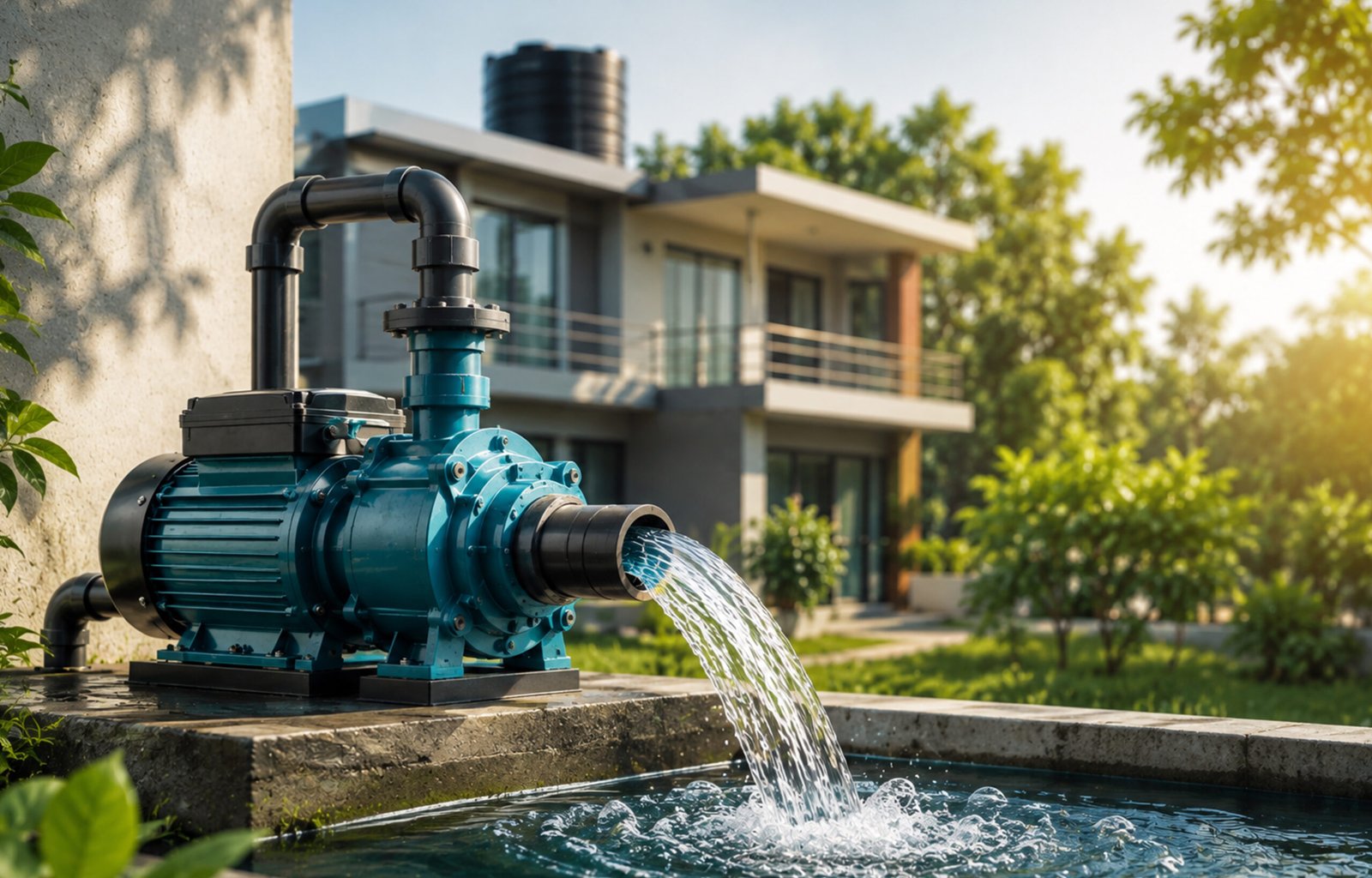
Self-priming monobloc pumps are a common choice for homes and small buildings. They pull water from a sump or tank at ground level and push it up to the terrace. They are easy to install and simple to service.
Jet pumps suit places where the water level is a little deeper, such as an open well. They draw water through an ejector and are quiet in daily use.
Submersible pumps sit inside the well or borewell, so there is no suction problem at all. Open well and borewell models are available, and they are the usual answer when the water is deep.
Pressure boosting and multistage pumps make sense for taller buildings or longer pipelines, where plain single-stage models may not reach the required head.
Check Your Power Supply
Voltage in many parts of Kerala rises and falls through the day. A pump that stops or overheats at low voltage is a daily headache. If your supply is unsteady, ask about models built for a wide voltage range. Also confirm whether your connection is single phase or three phases, because that limits the motor options. An automatic controller with dry-run protection is a small addition that saves the motor when the sump runs empty.
A Simple Worked Example
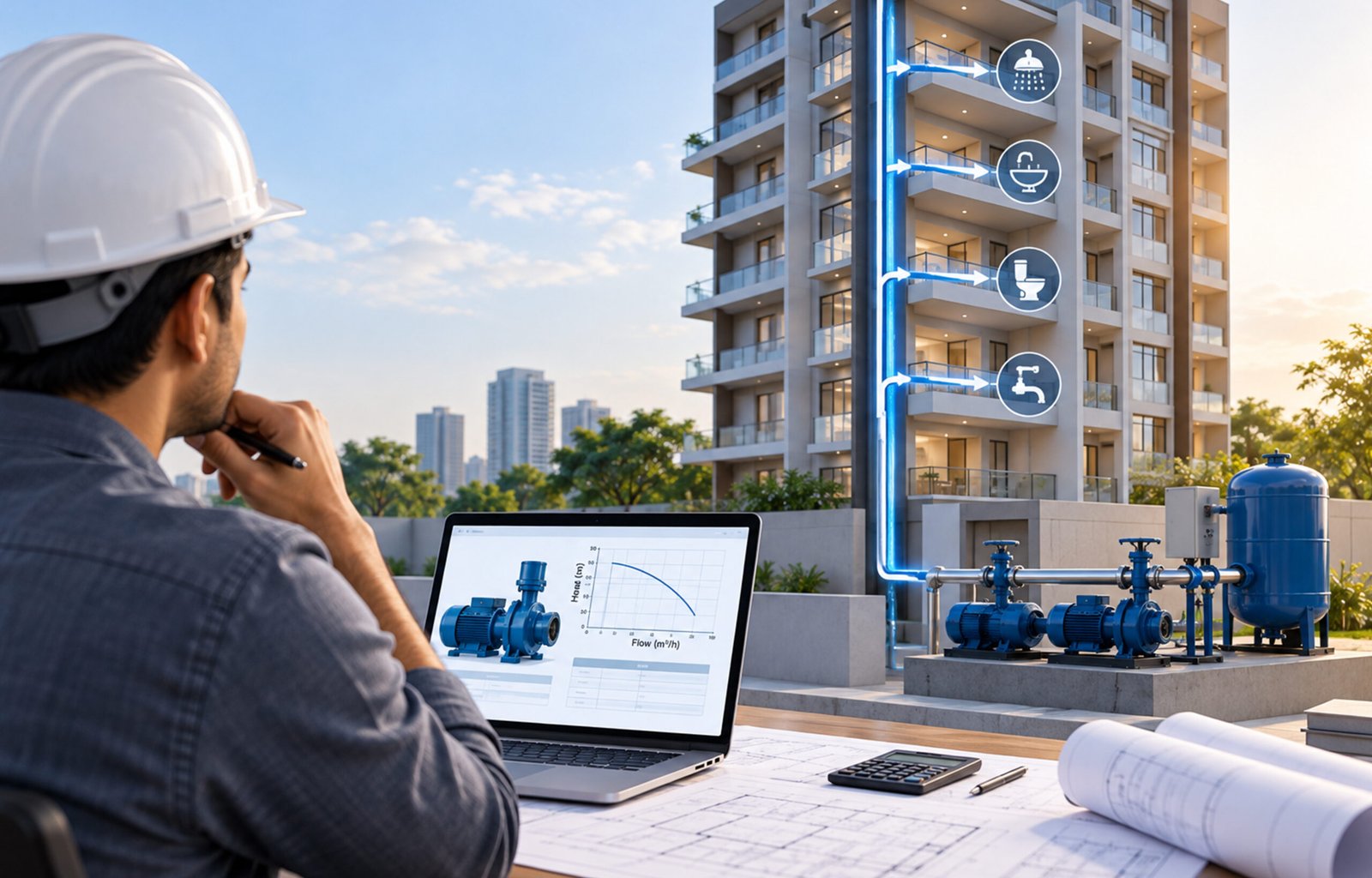
Take a house with a 1,000-liter overhead tank, a sump at ground level and a tank inlet about 10 meters above it. Add a margin for pipe losses, and the working head comes around 12 meters. For a filling time of 15 minutes, the flow is about 67 liters per minute. The power needed to move that water is small, and once motor and pump efficiency are counted, a pump in the half to one horsepower range usually covers it. A longer pipe or a taller tank would push this figure up. Treat this as a rough guide only, since your own pipe layout may change the answer.
Common Mistakes to Avoid
- Buying by horsepower alone, without checking head and flow.
- Choose a very large pump “to be safe.” It increases electricity use and strains pipes and fittings.
- Using a thin delivery pipe, which creates friction and cuts the flow.
- Ignoring the suction side. A long or leaking suction line is one of the main reasons a pump runs but delivers little water.
- Skipping a non-return valve, letting water fall back into the sump each time the pump stops.
How to Find the Right Supplier
A good pump is only half the job. The other half is the advice you receive before buying and the support you get afterwards. When you compare the top pump suppliers in Kochi, look for a few simple signs:
- They ask about your tank size, building height, and water source before suggesting a model.
- They deal with authorized products with proper warranty.
- They can guide you on installation and are available for service later.
- They explain the reason behind their recommendation rather than just quoting a price.
At Blue Diamond Agencies, an authorized Kirloskar dealer in Kochi, our team goes through these details with every customer. You can browse our pump sets and domestic range pumps to get an idea of what is available before you visit or call.
Filling an overhead tank should not be a daily struggle. Note your water source, measure the head, work out the flow, and check your power supply. With these four answers in hand, any experienced supplier can point you towards the right pump quickly.
FAQ
Who are the top pump suppliers in Kochi?
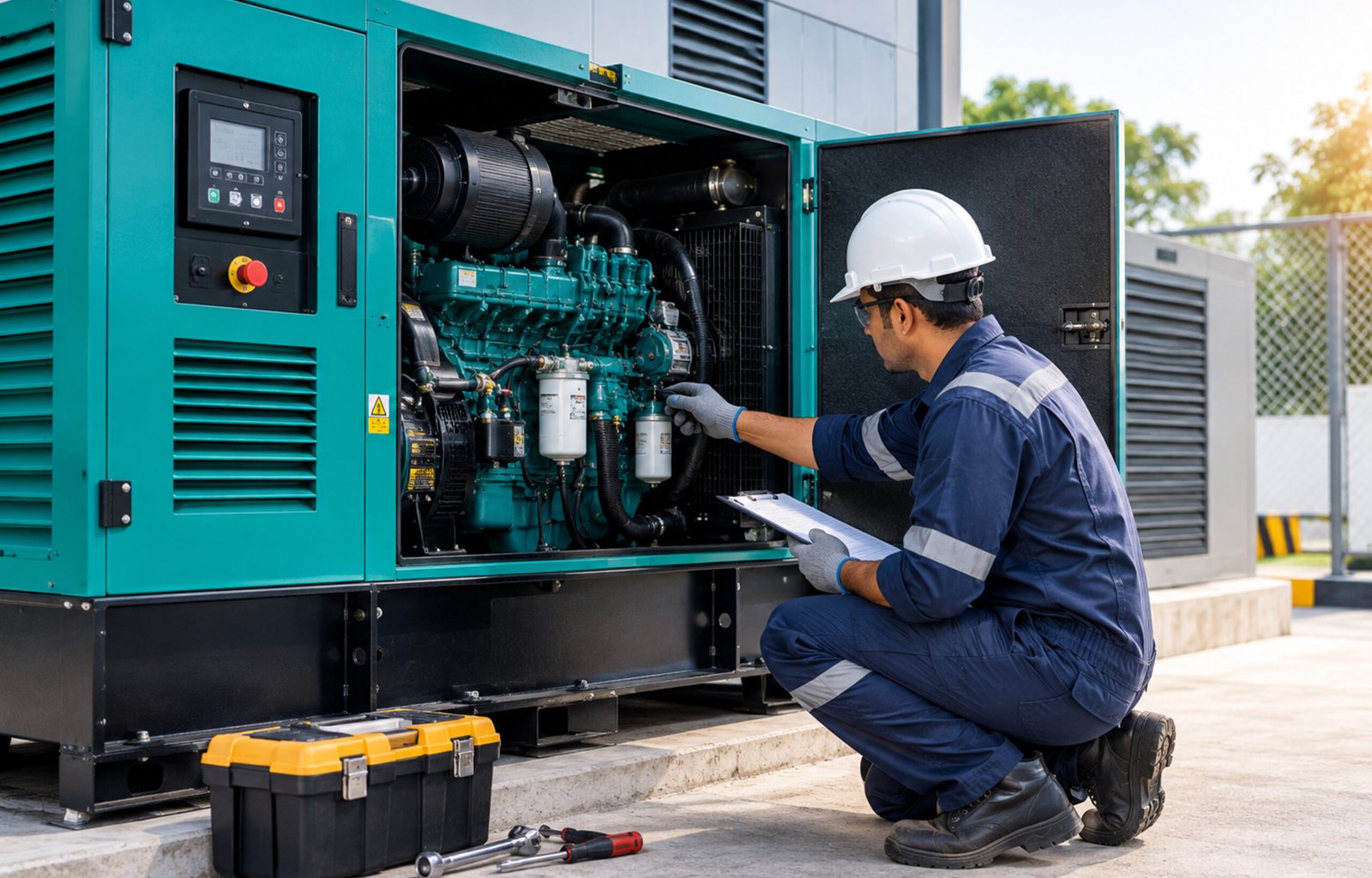
The top pump suppliers in Kochi are authorized dealers who offer genuine brands, expert selection advice, installation guidance and after-sales service. Blue Diamond Agencies is an authorized Kirloskar pump dealer in Kochi, supplying domestic, agricultural, industrial and submersible pump sets along with motors and generators.
Which pump is best for filling an overhead tank?
The best pump depends on your water source and tank height. Self-priming monobloc pumps suit sumps and ground-level tanks, jet pumps suit moderately deep open wells, and submersible pumps suit deep wells and borewells. A supplier should check head, flow rate, and pipe length first.
What size pump do I need for an overhead tank?
Most homes with a 500-to-1,000-liter tank use a half-to-one horsepower pump. The exact size depends on the vertical height, pipe length, bends and the fill time you want. Consult a pump supplier with your layout details for an accurate recommendation.
What should I ask about a pump dealer before buying?
Ask about the pump’s head and flow rating, warranty terms, suitability for your voltage conditions, installation support, spare parts availability and service response time. Also ask whether the pump matches your water source, since a wrong match is a common cause of poor performance.