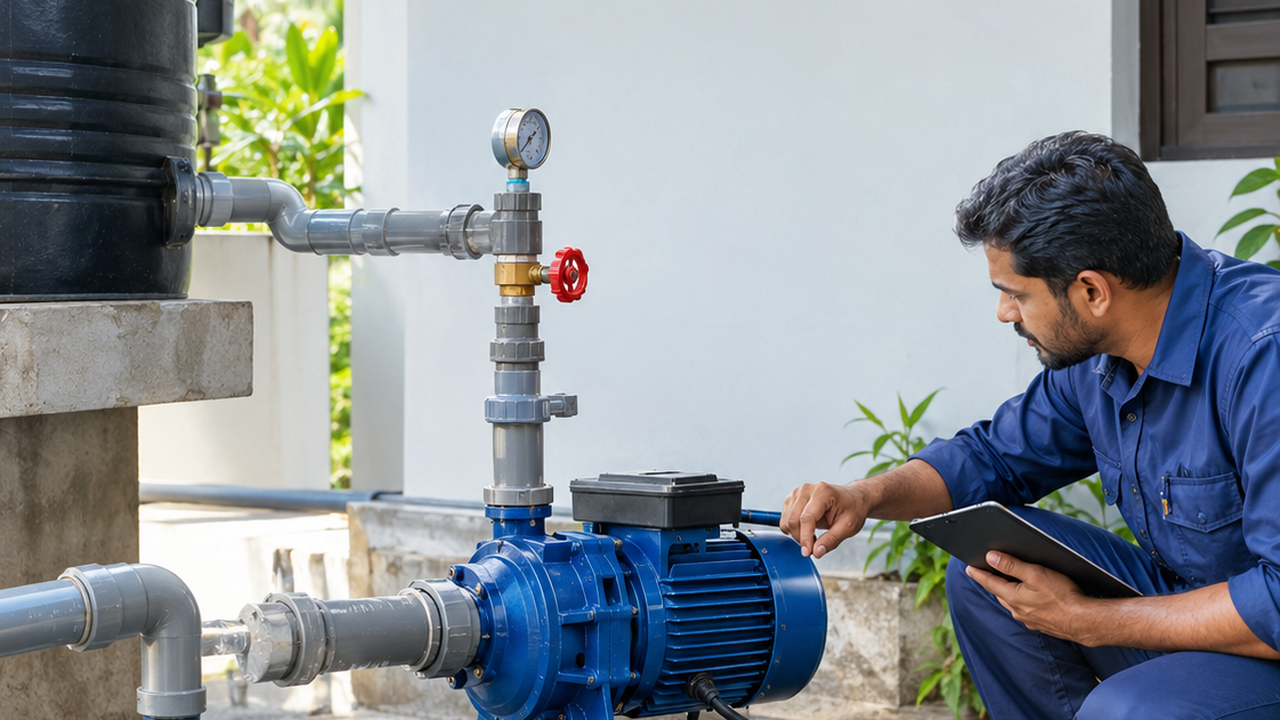
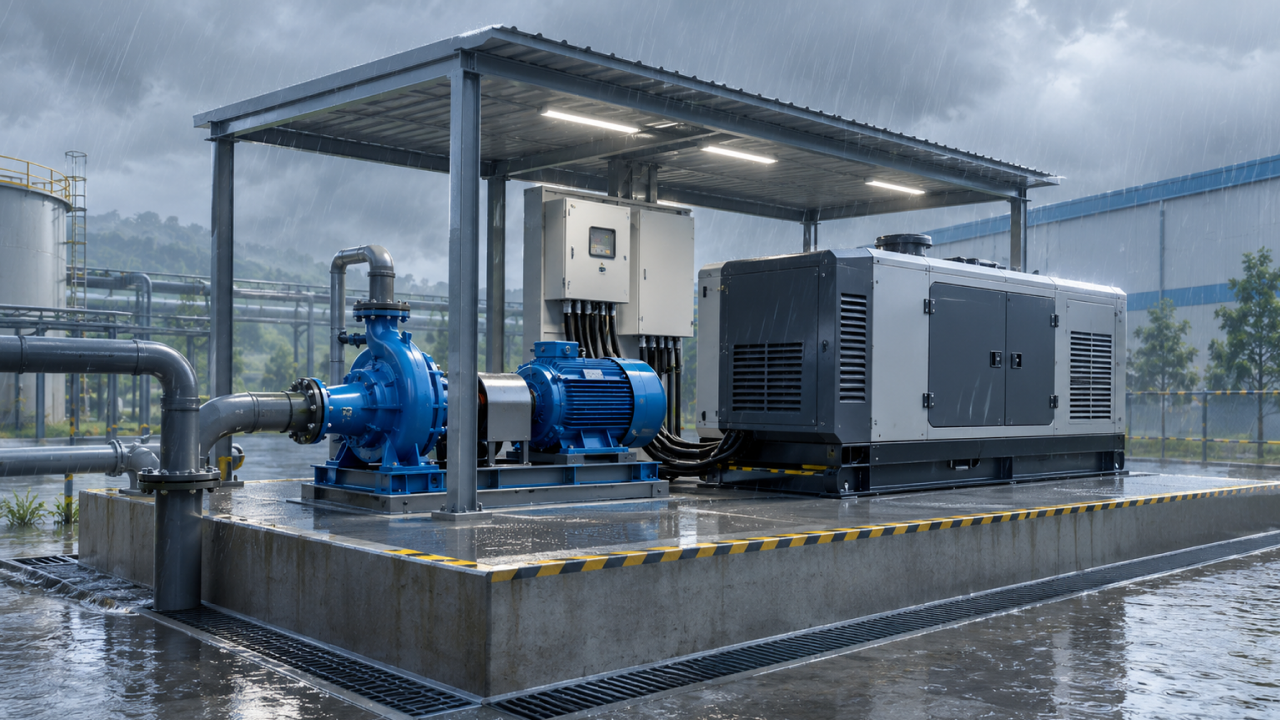
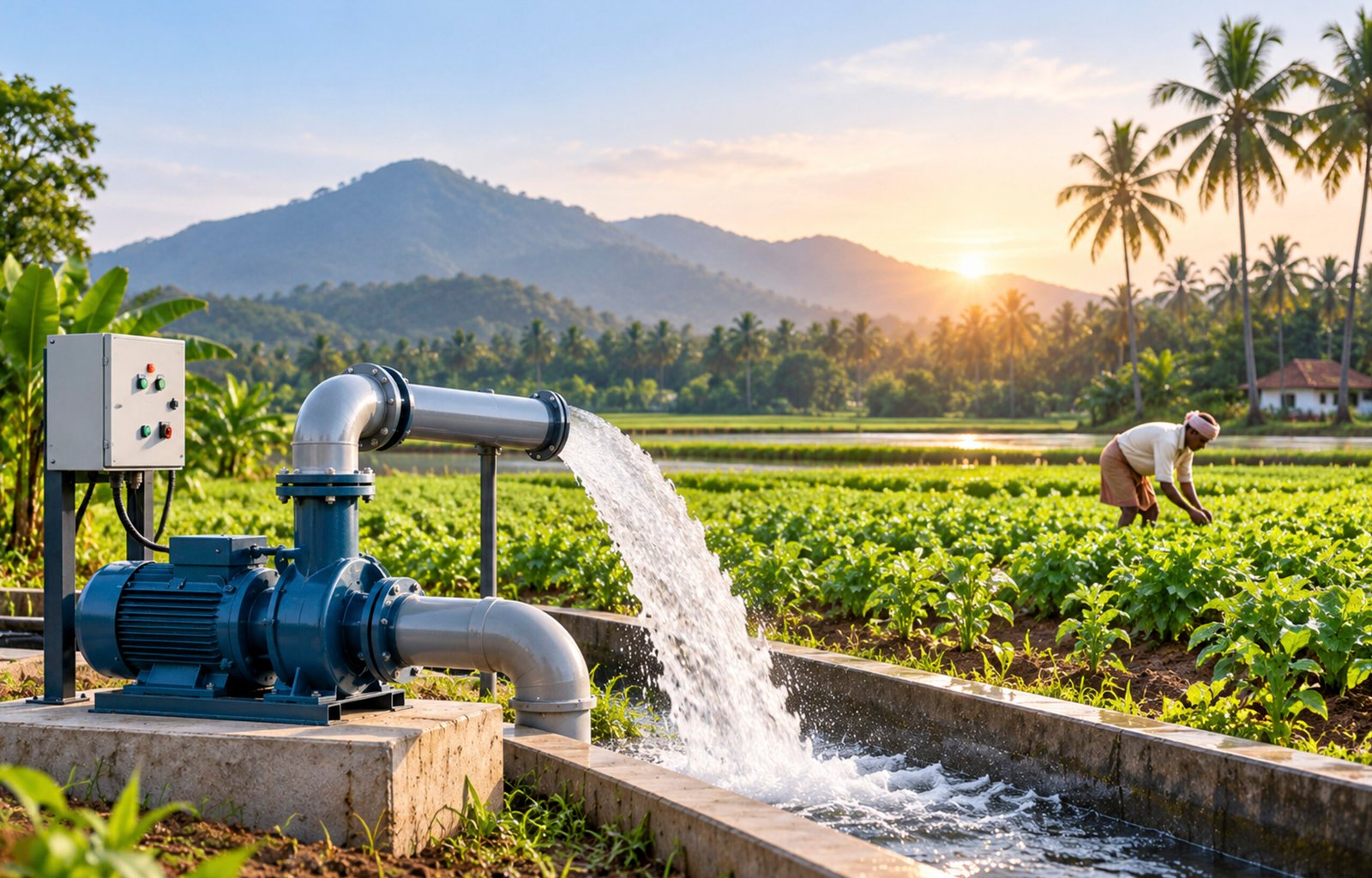
A pump that hums, shakes and warms up while the tap stays dry is a frustrating sight in any home, farm or factory. The motor is working, so the fault usually sits somewhere between the water source and the outlet. Before you replace anything, go through the eight causes below. Most can be spotted in under an hour, and many cost very little to fix. Pump suppliers in Kochi hear about these same problems week after week, so this list comes from what actually goes wrong on site.
1. Air trapped inside the pump
A centrifugal pump cannot push air the way it pushes water. After a power cut, a tank refill or a repair, the casing may hold air, and the impeller spins without gripping any liquid. Switch the pump off, open the priming plug, and fill the casing slowly until water spills out. Close the plug and restart. If the pump loses its prime again within minutes, air is getting in from somewhere else, which points to reason 5.
2. A blocked suction line or strainer
Sand, leaves, scale, and small stones gather in the suction pipe and strainer, especially in open wells and borewells during the monsoon. Flow falls slowly, then stops. Pull the strainer out, clean it, and flush the suction pipe with clean water. If you need to do this every few weeks, fit a larger strainer or lift the intake a little higher above the bottom of the source.
3. The motor turns the wrong way
Three-phase motors can spin in either direction, depending on how the wires are connected. After new wiring or a motor rewind, the rotation is sometimes reversed. The pump then runs, draws current, and delivers almost nothing. Compare the arrow on the pump casing with the direction of the motor fan. Swapping any two of the three phase wires corrects it, and a qualified electrician should do that job.
4. A worn or damaged impeller
The impeller is the part that throws water outward. Sand, cavitation and plain old age wear the vanes down, and a loose impeller can slip on its shaft. The motor keeps spinning while pressure drops. Open the casing and look for rounded vanes, cracks, or corrosion. If your supply has weakened slowly over several months, this is a strong suspect. Replacing an impeller usually costs far less than a new pump.
5. Leaks on the suction side
Any loose joint cracked fitting or dried-out gland on the suction pipe lets air in instead of water. Even a tiny gap breaks the vacuum that the pump relies on. Run the pump and brush soapy water over each joint; a film that gets pulled inward marks the leak. Replace tired seals and wrap every threaded joint with proper sealing tape or a fresh gasket.
6. The water level is out of reach
A surface pump can lift water only so far, roughly six to eight meters in real conditions. When a well drops in summer, the pump may no longer reach it. Pump suppliers in Kerala often get calls about this right after the dry months. Measure the vertical distance from the pump to the water surface. If it exceeds the pump’s rated suction lift, move the pump closer to the water, or switch to a submersible or jet pump that suits deeper sources.
7. Wrong pipe size or a pump that does not fit the job
Narrow pipes, too many bends and a long delivery run all add friction. If the head your system needs is higher than the pump was built to produce, water barely reaches the outlet or never climbs at all. Compare the pump’s rated head and flow with your real height and pipe length. Wider pipes and fewer elbows often restore flow without new equipment. When the mismatch is built into the setup, a correctly sized pump is the lasting answer.
8. A faulty foot valve or non-return valve
The foot valve keeps water in the suction pipe after the pump stops. If it jams open or debris holds the flap up, water drains back to the source, and the pump must prime from scratch every time. If it sticks shut, nothing gets through. Remove the valve, clean the seat and flap, and pour water in to see whether it holds. Replace it if the rubber has cracked.
When it is time to call a specialist
If you have checked these eight points and the pump still runs dry, stop the motor. Running a pump without water for long can burn the seal and damage the winding, and that repair costs more than the original fault. A trained technician can test pressure, current and flow properly and tell you whether a repair or replacement makes more sense.
If you are looking for pump suppliers in Kochi, Blue Diamond Agencies is an authorized Kirloskar pump dealer and supplier in Kerala. Their range covers domestic, agricultural and industrial pumps, along with submersible sets, shallow well pumps, jet pumps and pressure boosting systems. Whether you need a spare part, advice on sizing or a full replacement, it helps to deal with a supplier who can match the equipment to your well, your building and your daily water demand. You can reach them through the enquiry option on their website.
FAQ
Where can I find pump suppliers in Kochi for repairs or replacements?
Go to an authorized dealer first. They stock genuine spares and can often tell you right away if your pump is worth repairing. Blue Diamond Agencies is one of the pump suppliers in Kochi that handles Kirloskar pumps for domestic, agricultural and industrial use. Take the nameplate details along so they can match the model.
Why does my pump rattle but give no water?
That gravel-like rattle is usually a cavitation. Tiny air bubbles form inside the pump and burst against the impeller. The usual causes are a clogged suction line, a leaking joint, or a lift that’s too high. Switch the pump off and check the suction side before anything else.
How can I tell if my pump motor is spinning the wrong way?
Find the arrow marked on the pump body. Start the motor for a second or two and watch the fan. If it turns against the arrow, call an electrician. Swapping any two of the three phase wires fixes it.
Do I need a submersible pump or a surface pump?
It depends on where your water sits. A submersible pump goes down into the borewell or opens well and pushes water up. A surface pump stays on the ground and pulls water through a suction pipe, so it suits shallow sources. Pump suppliers in Kerala will usually ask for your water depth and pipe length first, so have both numbers ready.