Blog

|

15 Oct 2026

Power Cut Backup Solutions for Shops in Kerala: A Practical Checklist for Homes, Shops and Small Factories

It is a busy evening, the shop is full, and the lights go out. The billing machine stops, the freezer begins to warm, and customers drift away. Homes and small factories feel the same pinch in their own ways: spoiled food, silent machines and missed deadlines. 

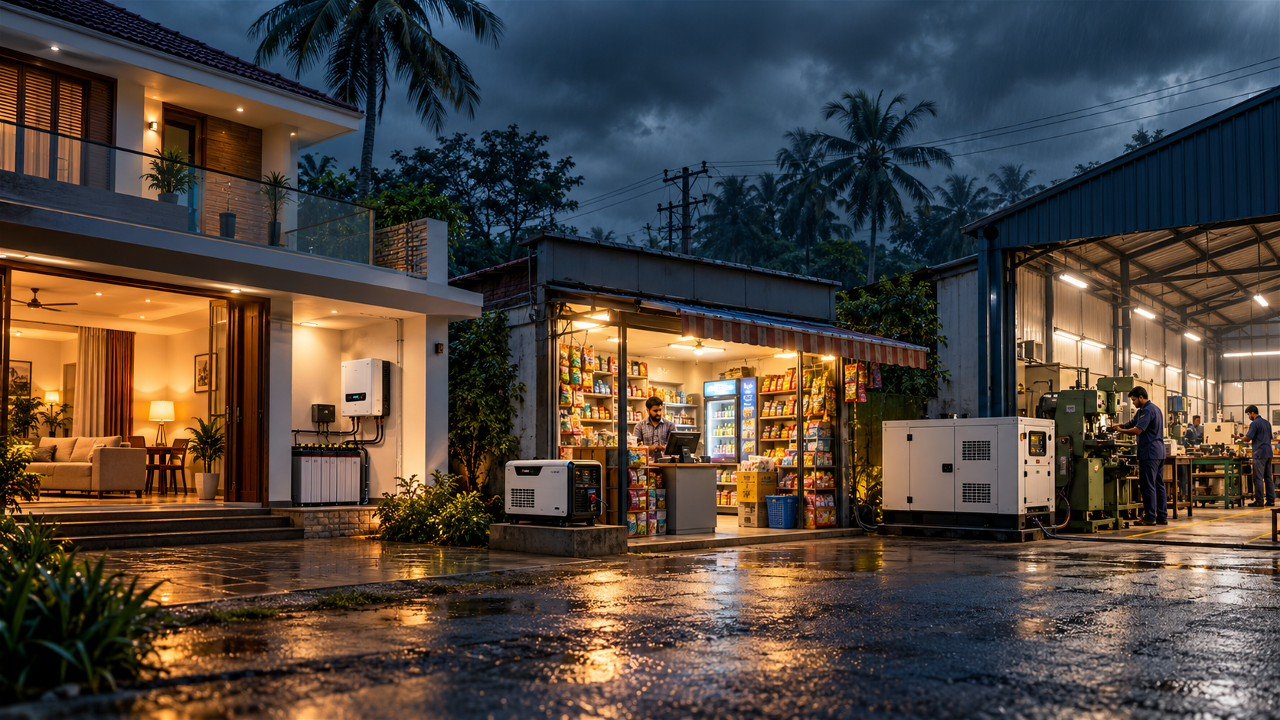
You cannot prevent an outage, but you can control what it costs you. This guide shows you how to plan power cut backup solutions for shops in Kerala, and the same steps work for homes and small factories. All you need is a pen and ten minutes.

1: Decide What Must Keep Running 

Backing up, everything is costly and rarely needed. Sort your equipment into two groups. 

  • Must run: anything whose loss costs money or safety, such as billing computers, freezers, CCTV, machine controls and water pumps. 
  • Nice to run: items you can skip for a few hours, such as decorative lights or the air conditioner. 

Backing up only the first group can shrink both the size and the price of your system. 

2: Estimate Your Load 

Every good plan for power cut backup solutions for shops in Kerala starts with one number: how much power you actually use. Get it wrong and you either overspend on a unit you don’t need or buy one that trips the first time the freezer starts. 

  1. Make your must-run list. Pull it from Step 1 and keep it short. 
  2. Note each item’s wattage. It is printed on the label at the back or base. If the label shows amps, multiply by 230. No label? As a rough guide, a ceiling fan uses 60 to 75 W, a fridge or freezer 150 to 300 W, a computer with monitor 150 to 300 W, and a small water pump 400 to 900 W. 
  3. Add everything up. That total is your running load. 
  4. Make room for startup power. Motors in freezers, pumps and compressors pull two to three times their usual power for a few seconds as they start. Take your biggest motor and add that extra to your total. 
  5. Keep a 20% cushion. A unit running at its limit wears out faster and has no room for the next appliance you buy. 
  6. Convert to kVA. Generators are rated in kVA, so divide your total watts by 800. 
  7. Know your phase. Most homes and small shops run on single-phase supply. If your factory has three-phase motors, you need a three-phase generator. 

3: Match the Solution to Your Need 

There is no one-size-fits-all answer. The right backup power solutions in Kochi and across Kerala depend on what you run and how long your outages usually last. 

  • Inverter with battery: silent and instant, and good for lights, fans, routers and computers. How long it lasts depends on the battery, so it won’t cope with heavy equipment or all-day outages. 
  • UPS: Buy your billing machine or computer for a few minutes, enough to save your work and shut down safely. It also smooths out voltage spikes. 
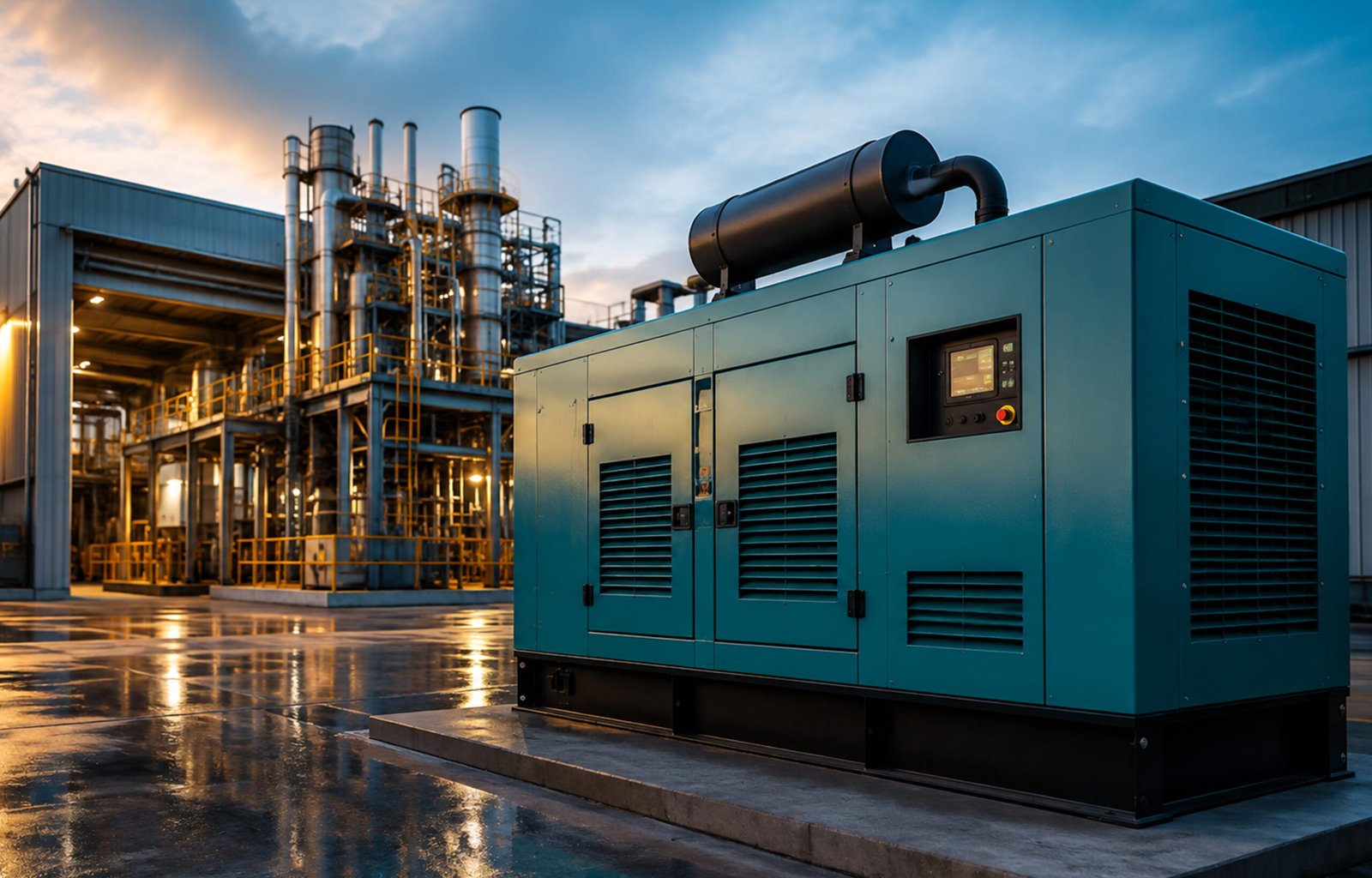
  • Diesel generator: the dependable pick for long outages, refrigeration, workshops and factories, since it keeps going as long as there is fuel. If neighbors are close by, go for a soundproof model. 
  • Solar with battery: cut your electricity bill and doubles as backup. The catch is a higher upfront cost and the need for roof space. 
  • Hybrid setup: a common choice for shops, with a UPS for computers, an inverter for lights and fans, and a generator for heavy loads. 

Quick match: 

  • Home with outages of 1 to 3 hours: inverter with battery 
  • Home with a pump or AC, or longer outages: silent generator plus inverter 
  • Small shop with billing and lights: UPS plus inverter 
  • Shop with freezers or AC: generator with automatic changeover 
  • Small factory: right-sized three-phase generator with an Automatic Transfer Switch (ATS) 

4: Put Safety First 

A badly installed backup system can hurt people, so don’t cut corners here. 

  • Keep generators out of closed spaces. The exhaust carries carbon monoxide, which is poisonous and has no smell. 
  • Fit a proper changeover switch. Without one, your generator can send power back into the street line and put electricity workers at risk. 
  • Get a licensed electrician to check your earthing and wiring. 
  • Store diesel in approved containers, away from heat, and keep a fire extinguisher within reach. 
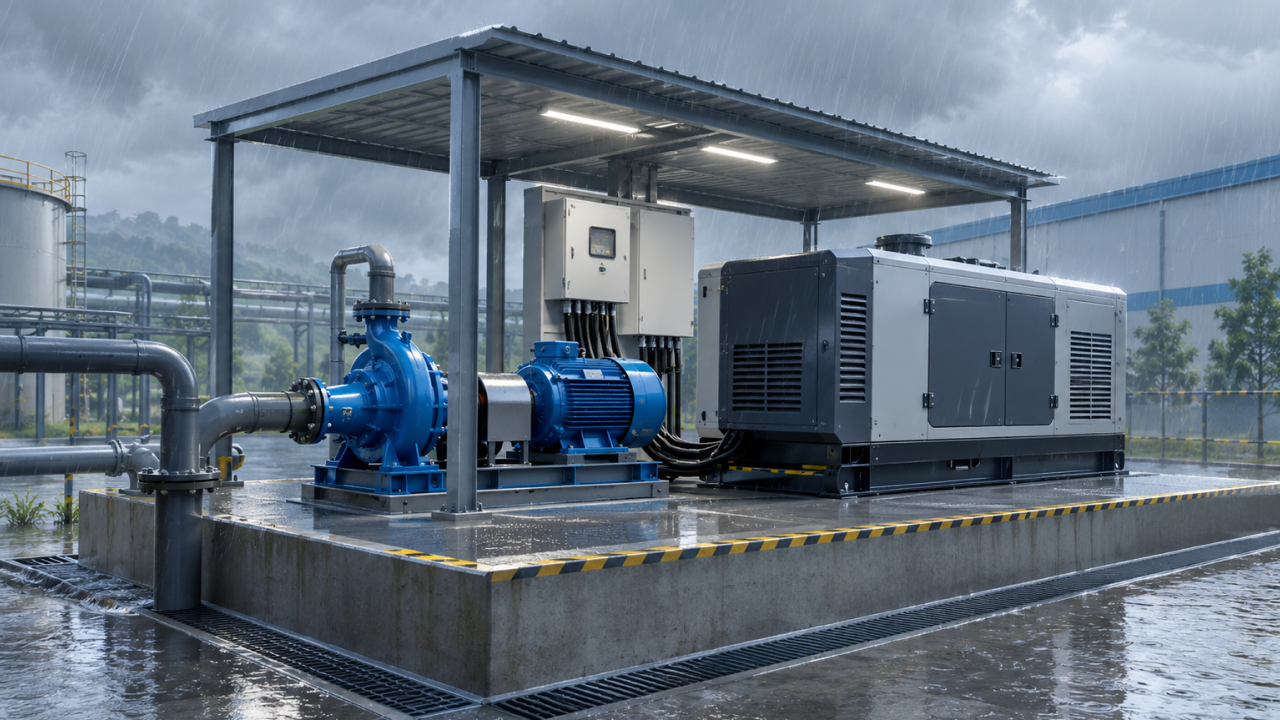
  • Shelter the generator from the rain. Use a covered, ventilated spot during the monsoon. 

5: Maintain It Before You Need It 

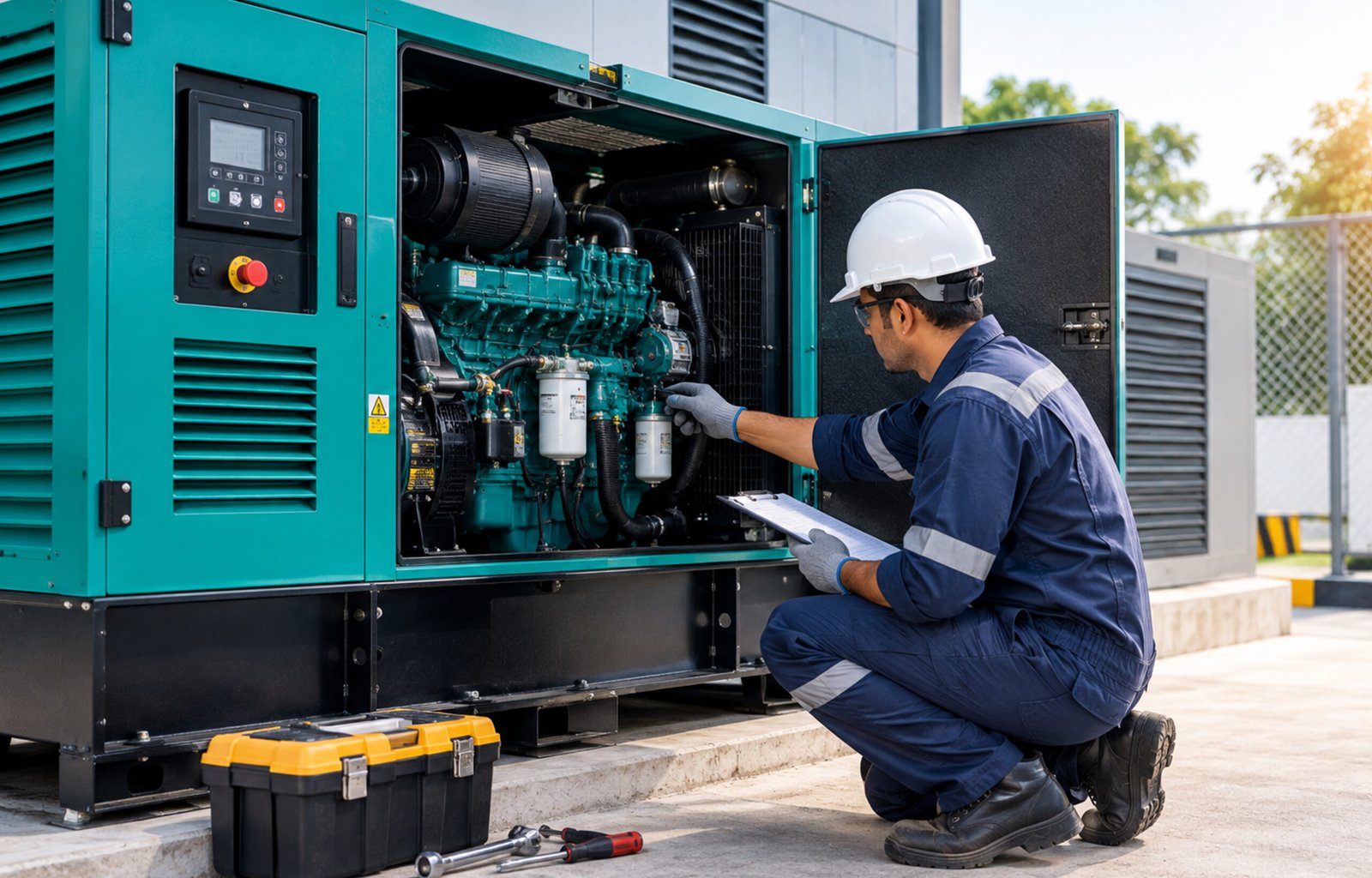
A generator that won’t start during an outage is just an expensive ornament. A few habits prevent that. 

  • Run it now and then, even when the power is on. 
  • Check oil, coolant and fuel before the monsoon begins. 
  • Look over the battery terminals for corrosion. 
  • Change filters on schedule and test your changeover or ATS occasionally. 
  • Keep your supplier’s service number saved in your phone. 

Consider an annual maintenance contract (AMC). Routine servicing almost always costs less than an emergency repair. 

Common Mistakes to Avoid 

  1. Choose on prices alone. A cheap unit that is too small will trip exactly when you need it. 
  1. Forgetting startup power. Pumps and compressors need a burst of extra power to get going. 
  1. Skipping the changeover switch. It is there for safety, not as an optional extra. 
  1. Running low on fuel. Keep a reserve, especially before the monsoon. 
  1. Never test the setup. Find out it works on a normal day, not in the middle of an outage. 


6: Choose a Supplier Who Stays After the Sale 

Buying the generator is the easy part. What matters more is who you call when something goes wrong. Before you pay, ask the supplier a few simple things: 

  • Will someone visit your shop or unit to check your load before suggesting a model? 
  • Is the brand genuine, and do you get a warranty card? 
  • If the generator stops at 9 pm in the middle of a monsoon storm, will anyone answer the phone? 

When you compare generator suppliers in Kochi, look beyond the price of the quotation. Find out who handles the installation, how quickly a technician can reach you, and whether spare parts are kept nearby. Apply the same questions to backup power solutions in Kochi. Paying a little more for reliable service often saves money in the end, because a cheap unit waiting a week for one spare part costs you far more in lost business.

Your Printable Checklist 

Print this page, keep it near your main switchboard, and tick each item once it is done. 

For every home, shop and unit 

  • List the equipment that must keep running 
  • Add up the load and allow extra for motor startup 
  • Choose a backup that matches the load 
  • Install a changeover switch or ATS 
  • Have the earthing checked 
  • Save your supplier’s service number in your phone 

For shops 

  • Connect a UPS to the billing computer and POS machine 
  • Keep freezers, lights and CCTV on backup 
  • Store a reserve of fuel 

For small factories 

  • Work out the full three-phase load 
  • Add surge and voltage protection for your machines 
  • Set up regular servicing or an AMC

Power cuts will keep happening, especially in the monsoon, but how much they cost you is in your hands. Decide what truly needs power, measure your load honestly, pick the right backup and keep it in good shape. Do these four things and you will have dependable power cut backup solutions for shops in Kerala, and the same goes for your home or factory.

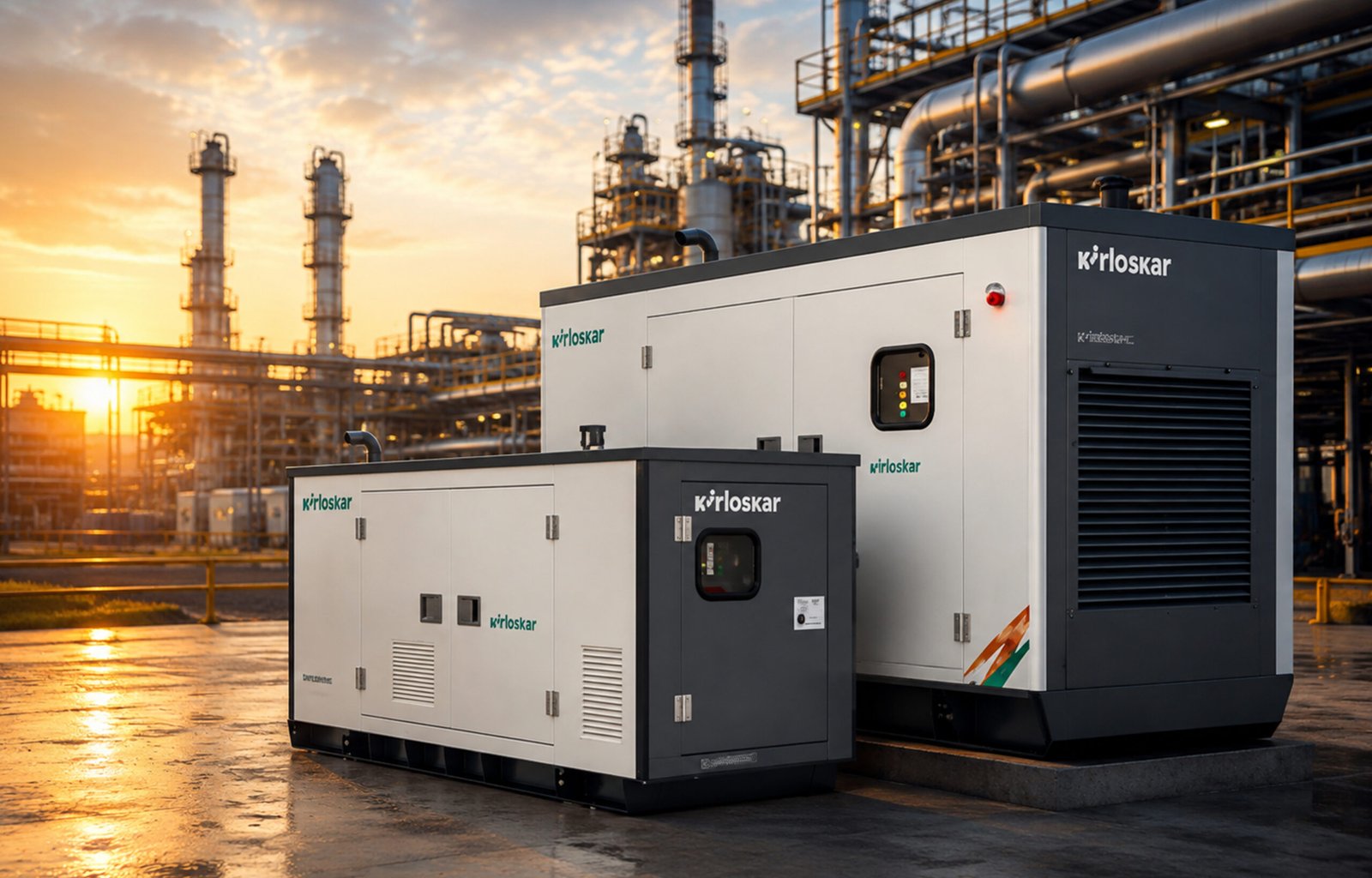
Blue Diamond Agencies is an authorized Kirloskar dealer and one of the trusted generator suppliers in Kochi, serving customers across Kerala. We offer diesel generators, petrol generators, portable DG sets and stationary generators, along with pump sets, motors and firefighting pump sets. If you need backup power solutions in Kochi, our team will help you choose equipment that suits your home, shop or small factory, and we remain available for service after installation. 

Not sure where to begin? Send your equipment list through our enquiry page, and we will suggest the right capacity before you buy. 

FAQ

1. What is the best power backup solution for a shop in Kerala?

For a small shop, an inverter with a tubular or lithium battery usually does the job. It keeps your lights, fans, billing computer, CCTV and Wi-Fi going when KSEB power drops, so you don’t lose sales or data. If you also run a fridge, a freezer or any heavy machine, you’ll likely need a bigger inverter setup, a hybrid solar system or a generator. Not sure which one fits? Blue Diamond Agencies can check your load and suggest a system that suits your shop and budget.

2. How many hours of backup will my battery give?

  • Take a 150Ah, 12V battery. That gives you around 1,260Wh of usable energy, so a 300W load will run for about 4 hours.
  • Heavier loads drain it faster, and so does an old battery.
  • Adding a second battery can double your backup time, as long as your inverter supports it.

3. What backup options are suitable for small factories?

Most small factories need a generator, a three-phase inverter system, or a mix of both. It depends on what you’re running.

  • Light loads like lighting, computers and small tools: a large inverter system is often enough.
  • Heavy motor loads: a diesel or petrol generator with an automatic changeover switch is usually the more practical choice.
  • Mixed use: keep the critical items (controls, CCTV, lights) on batteries and let the generator handle the heavy machinery.
  • Before you decide, have a qualified electrician measure your connected load and start-up currents.

4. How often should I service my inverter and battery?

Check your system every 2–3 months, and book a professional service at least once a year.

  • Look at the water level in tubular batteries, the terminals for corrosion, the ventilation, and any odd heat or noise.
  • Keep the inverter somewhere dry and well ventilated, away from water and damp.
  • Clean the terminals and apply protective grease when needed.

Farming in Kerala isn’t easy. Some days the rain helps, and some days it leaves the fields thirsty. Over the years at Blue Diamond Agencies, we’ve met farmers who struggled simply because the water didn’t reach their crops on time. And many of them turned their fields around with the help of the right Kirloskar pump — nothing fancy, just the right machine for their land.

My paddy finally grew evenly this season…”

A farmer from Kottayam told us this with a smile. His old pump kept stopping halfway, and one side of the field always stayed dry. When he came to us, we checked his well depth and suggested a Kirloskar submersible pump.

He came back after harvest and said, “This year, the water spread properly. No patches. No waste.” Sometimes, that’s all a farmer needs — steady water, at the right time.

Voltage used to ruin my day. Not anymore.”

A banana grower from Palakkad had a different problem. The power in his area went up and down like monsoon winds. His pump couldn’t handle it. We recommended a wide-voltage Kirloskar Monobloc pump.

A month later he said, “I don’t even check the switch now. It just runs.” Less stress. More time on the field.

“I saved money without even trying…”

Another farmer from Thrissur told us he saw his electricity bill drop after switching to a more efficient Kirloskar model. Not because he planned for it — just because the pump wasn’t struggling anymore. Small changes. Big results.

Why These Success Stories Matter

Every farm is different. Some rely on open wells, some on borewells. Some have clay soil, some sand. That’s why we don’t hand over a box and walk away. We ask questions —

  • What’s your water level?
  • How long do you run the pump daily?
  • Is power stable in your area?

When these details match the right Kirloskar pump, the farm performs better. Simple as that.

FAQs

Related Blogs

Copyright © 2026 by Blue Diamond . All rights reserved.

Enquire Now